
Antioch Previous Residents: Sources by Era
Each source answers a different part of the question of who was connected to one Antioch address. This is a map of coverage, not a promise that every household is preserved.
| Source | Years It Covers | Where Held | What It Shows |
|---|---|---|---|
| Assessor roll, CCMAP, and ParcelQuest Lite | Current; CCMAP parcel data updated monthly | County web tools and assessor counter in Martinez | APN, situs, value, structure, map; roll owner and mailing address at the counter |
| RecorderWorks recorded-document index | Current index plus Old Book indexes back to 1849 | Online index; Clerk-Recorder at 555 Escobar Street | Grantors, grantees, instruments, dates, legal descriptions, and deed-chain clues |
| Book/Page index mode | 1986-1993 specifically | RecorderWorks and older county books | Book and page references for that limited period, not a universal online cutoff |
| Antioch newspaper title family | 1870 onward, with gaps and title changes | County Library online, film, paper, and NewsBank | Occupants, obituaries, marriages, notices, addresses, and community events |
| Federal population census | 1790-1950 public; 1960 opens in 2032 | NARA, FamilySearch, and library databases | Enumerated households, relationships, ages, birthplace, and occupation |
| County ePermits and Antioch Civic Access | County system from January 1, 1980; incorporated city system separate | County permit tools and Antioch city portal | Applications, status, inspections, and project chronology, not proof of residence |
Begin with the APN and assessor material. For an older household, add newspapers, directories, census schedules, and local collections. Silence is a gap to document, not proof that no one lived there.
The Contra Costa County Historical Society collections page describes the regional holdings that can help place an Antioch deed, tax entry, or probate reference in context.
Use the History Center's indexes as finding aids, then cite the original deed, newspaper issue, court file, or local log that supports the conclusion.
Antioch APNs Start the Previous Residents Trail
A street number is a useful entry point, but the APN is the steadier bridge between the map, assessment record, and RecorderWorks chain. Search the full or partial address in CCMAP or ParcelQuest Lite, save the APN exactly as displayed, and note the situs, parcel shape, values, structure, lot size, aerial context, and legal-description link.
Contra Costa's free online property tools omit every owner name because protected-address exclusions could not be maintained selectively at the web layer. The public roll remains at the Martinez counter. A counter map is listed at $3, mailing address $2.50, printout $1 per page, characteristics $7.50, and radius search $50. Check the current fee schedule.
Do not equate the mailing address with the property address. Situs identifies the land; a later correspondence address needs a transfer or corroborating source before it is tied to the parcel.
Tracing Antioch Previous Residents Through Deeds
Recorded instruments identify parties to a transfer, not every person who occupied a building. Still, the Contra Costa deed chain is the backbone of an address history because each instrument supplies a legal description, recording date, and party relationship that can be tested against other sources.
- Resolve the current address to an APN and legal description, then obtain the current roll owner from the assessor counter.
- Search RecorderWorks for the current owner's acquisition deed by grantee, APN, legal description, document type, or recording date.
- Capture the seller, buyer, instrument number, recording date, document type, book or page when shown, and the legal description.
- Search the seller as a prior grantee, keeping the lot, block, subdivision, or metes-and-bounds description beside the name to avoid a same-name merge.
- Repeat backward until the electronic search becomes unclear, then move to the Martinez grantor-grantee books and deed volumes.
- Grantor and grantee
- The grantor transfers an interest; the grantee receives it. The same person can be a grantee in one deed and a grantor in the next backward step.
- Chain of title
- A linked sequence of recorded transfers for the same land, checked by date and legal description.
- Legal description
- The lot, block, subdivision, or boundary language that identifies land more reliably than an old street number.
- Reconveyance
- Usually a loan release, not a new ownership transfer. Read the document type before counting it as a prior owner.
RecorderWorks fields include Party Type, Name, partial match, document number, recording date range, document type, Book/Page, APN, and Legal Description. An image or order action may appear; keep the index result and document image separate.
Antioch Previous Residents in Old Books and Book/Page
RecorderWorks exposes Old Book options labeled 1849E and 1849R, followed by later volumes. Those labels support an 1849 starting point for the direct and reverse indexes, not a claim that every Antioch instrument or image from that year is online. The Book/Page tab is specifically documented for 1986-1993. Do not use that mode as though it were the full historical search.
When the electronic trail is incomplete, contact the Clerk-Recorder at 555 Escobar Street in Martinez about the exact series. Older handwritten grantor and grantee books can bridge gaps. Match candidates by legal description, APN, recording date, and party sequence.
The FamilySearch Contra Costa catalog is useful for locating county books and histories, but a catalog result is not proof that the needed page is digitized or open from home.
Record whether you saw an index, image, book citation, or staff-held item. Those are different levels of evidence.
Note: Old Book labels show index coverage, not guaranteed remote access to every historical image or page.
Antioch Permits Add Dates, Not Previous Residents
Numbers. County ePermits exposes county-system application history from January 1, 1980 forward. Incorporated Antioch construction belongs in the city's Civic Access and Community Development systems, so the county and city channels must remain separate. Antioch Civic Access permits a public no-login search by full or partial address or APN; registered users can submit Building, Planning, and Encroachment applications, schedule inspections, and pay invoices.
Permit evidence has its own sequence: application, issuance, inspection, and final. The applicant, owner, designer, and contractor can differ. A permit dates a project, not who occupied the address; utility customer records are private.
| Application | Shows that a project request was filed, with the address and project description as the system provides them. |
|---|---|
| Issuance | Shows a permit was issued, not that work was complete or that the applicant lived there. |
| Inspection | Dates a review or site event; read the status and result rather than assuming completion. |
| Final | Can close a project chronology, but still does not identify every resident or occupant. |
Note: Permit issuance dates work chronology; they do not identify who occupied the parcel then.
Antioch Newspaper Titles Preserve Past Residents
The newspaper trail can bridge two deeds. Search the whole title family: Antioch Ledger, Weekly Antioch Ledger, The Ledger, Antioch Ledger, Daily Ledger, Daily Ledger Post Dispatch, and Ledger Dispatch. The run begins in March 1870, with selected online pages, branch film, paper holdings, and NewsBank from March 1997.
Obituaries can supply a residence, relatives, a former address, or a place of death. Marriages, school lists, legal notices, land transactions, advertisements, and social columns can supply other date-bound clues. Because many items are family-supplied or editorially condensed, verify a major relationship or property claim against vital, probate, or recorded material.
Search variants, initials, married names, and the street as well as the surname. Keep the issue date and page number. A newspaper association is not automatic proof of ownership or a complete household.
The Contra Costa historical newspaper holdings page identifies the online, film, paper, and NewsBank channels.
1950 Census Households and Antioch Previous Residents
Deeds track recorded interests, while census schedules and reverse directories are better for the household layer. The latest public federal census in 2026 is 1950 under the 72-year rule. It can add household details to an address clue, but enumeration districts and old street descriptions complicate browsing.
Pair each available directory or telephone year with the closest census. A 1949 PT&T subscriber can be compared with the 1950 enumerated household, then a Ledger notice or museum log can extend the trail. Telephone pages usually name subscribers, not all household members. A missing name can mean an unlisted phone, a different subscriber, a move, or an index gap.
Local access is mixed: the branch supplies film and catalog help, the museum Library Room supplies tax, parcel, meeting, and school material, and FamilySearch or library databases may require an account or affiliate visit. Record the channel for each fact.
The National Archives census research page explains the 72-year public-access rule used for the household pairing.
Note: Census households fill an era gap, but they do not turn a postal label into a current address directory.
Probate Closes an Antioch Previous Residents Trail
Probate and civil records can explain what happened after a resident left an address or died, especially when an obituary identifies relatives but not the disposition of property. Contra Costa's online civil page covers eligible civil and small-claims documents and minutes, while probate registers of action may be online even when probate documents require Court Records. Older physical files can require retrieval, and sealed or confidential material remains unavailable.
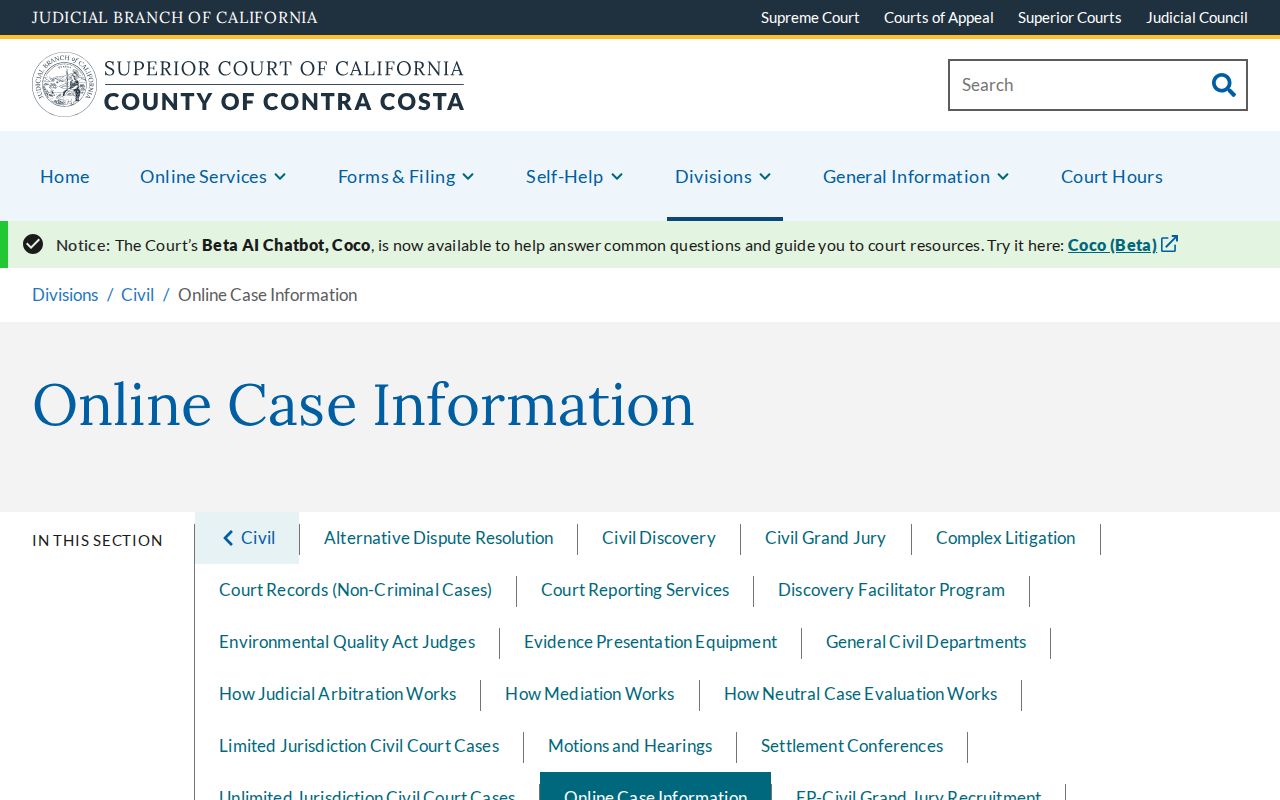
The Contra Costa civil case information page is the proper starting channel for the public index and its current scope.
The Contra Costa civil case information page sets the access context for this record capture.
The Contra Costa County Historical Society provides the collection context for this historical record lead.
Use the case number, parties, filing date, case type, status, hearings, and register-of-actions events to distinguish people with common names. Court allegations are not findings, and a public case index is not a current-address directory.
The same civil records channel may be relevant when a probate register points to a document held by Court Records rather than in the web view.
Use the obituary for family language and the probate register or petition for names and notice relationships. Ask Court Records about filing location, retrieval, and copies.
Why CDCR Is Not Ordinary Residence Evidence
A state incarcerated-person record can help explain a research gap, but it should never be treated as ordinary residence evidence. The California Department of Corrections and Rehabilitation CIRIS search accepts a last name or CDCR number and can show fields such as name, age, CDCR number, location, admission date, commitment county, and parole-eligible date. Those fields describe a correctional record, not a household at an Antioch parcel.
The California CIRIS search is an official informational channel with a current-accuracy disclaimer.
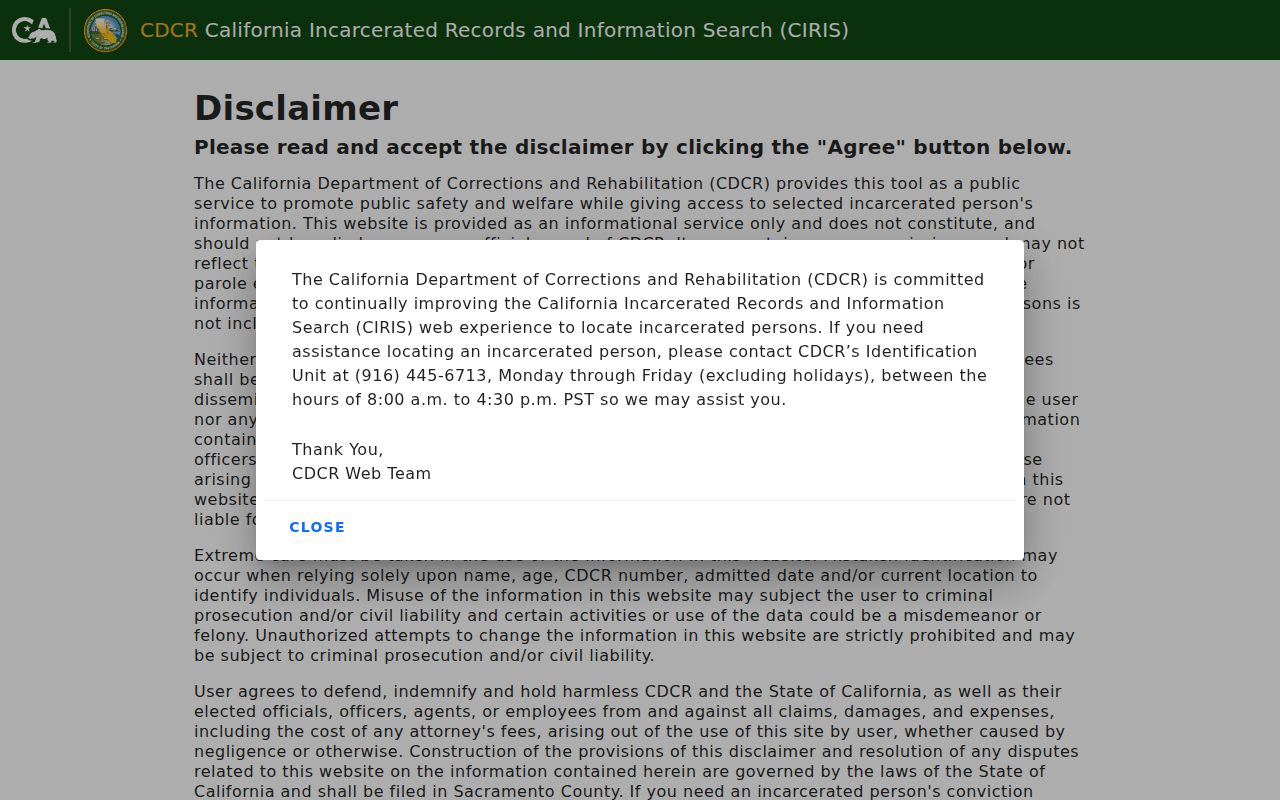
Do not use a CDCR match to fill a missing directory line or infer family. Confirm identity through an APN, deed, newspaper, census, probate, or another source suited to the question.
The Antioch Address Trap for Previous Residents
Antioch grew from its historic waterfront through postwar areas south and east of Highway 4, so a street name can outlive a boundary, extension, subdivision, or numbering change. Research did not locate an authoritative dated citywide street-renumbering program. The Library of Congress Sanborn map collection can be searched for local sheets, but no Antioch sheet or year was confirmed. Keep the modern APN, the old legal description, the printed street text, and the jurisdiction together, and check whether the postal city, school district, water district, and city limits tell the same story.
At each handoff, ask whether the record identifies land, a party, an occupant, a family connection, a project applicant, or a correctional record. If unclear, label it a lead. This prevents a same-name deed, mailing address, or obituary sentence from becoming an unsupported claim.
Lawful use. Antioch house-history and family-history research should stay tied to a legitimate personal question. Do not use a record trail to watch, threaten, harass, or repeatedly contact a living person.