
Find Antioch Residents by Record
An Antioch residents directory search works best when the first source matches the clue. An address points to CCMAP or ParcelQuest Lite. A known owner or seller points to RecorderWorks. A person whose identity is already known can use the California voter-status tool, the Contra Costa court portal, or a vital-record request. A past household calls for newspapers, census schedules, directories, and the local historical collections.
These sources answer different questions. A parcel map can show an APN, land shape, assessed value, and building details, but Contra Costa does not display owner names in its free online property tools. A deed records an interest at a point in time. A voter result is individualized and requires identity data. A telephone book usually names a subscriber, not every person in a home. A result is useful when its date, role, and custodian stay attached.
Use this five-part starter path, then move to the page that owns the narrower task.
- Start with the address or name you actually have. Preserve spelling, initials, suffixes, former surnames, and the date of the clue.
- Use Contra Costa property tools or CCMAP to connect an address to an APN and parcel shape.
- Run the deed index, court party search, license search, or business search that fits the question. Narrow common names by date and role.
- For an older Antioch household, pair a newspaper or telephone entry with a census, obituary, deed, or probate record.
- Ask the custodian for a finite record when the online view is incomplete. Inspection, copying, and certification are separate access steps.
Note: A public record can be a lead without proving that a person still lives at the related address.
Where Antioch Resident Records Live
Antioch has no separate deed office or municipal court. Land, assessment, vital, election, and most court records move through Contra Costa County or California custodians. Martinez is the county seat and the main counter location for the Clerk-Recorder, assessor, and Elections offices. Court filing for Antioch ZIP codes goes to the Richard E. Arnason Justice Center in Pittsburg. The division matters: a city request cannot correct a county deed, and a county clerk cannot certify a probate order held by Superior Court.
Contra Costa Clerk-Recorder
555 Escobar Street, Martinez
925-335-7900
Contra Costa Assessor
Martinez counter for public roll ownership information
ParcelQuest Lite and property tools
Contra Costa Elections
555 Escobar Street, Martinez
925-335-7800
California voter-status lookup
East County Superior Court
1000 Center Drive, Pittsburg
925-608-1000
Contra Costa Public Portal
For city-created records, send a focused request through Antioch’s records hub or the City Clerk. Police incident, event, and traffic reports instead go to APD Records at 300 L Street. A record request should name the department, date range, record type, and useful terms. The public agency may have to search and disclose an existing record, but it does not have to build a new directory.
The Antioch Owner-Name Gap Online
The most important local quirk in the current Antioch residents directory is the split between map data and ownership data. CCMAP and ParcelQuest Lite accept an address or APN and expose parcel geometry, assessed land and improvement values, building square footage, lot size, aerial imagery, contours, and map links. Owner names are intentionally omitted from the free web tools because Contra Costa found it impractical to maintain protected-address exclusions selectively. The roll remains public at the assessor counter.
That policy changes the search order. A web search can turn a street address into an APN, but the APN must then be taken to the assessor for the public roll owner and mailing address. The mailing address is where tax notices go, not proof that someone occupies the parcel. A condominium APN may represent shared land, a vacant parcel has no home, and a corner lot may carry a different street name from the front door.
For a visual starting point, the CCMAP parcel viewer shows the address-to-parcel path used in an Antioch residents directory search.
The mapped shape is the bridge to the counter, not a substitute for the roll. Record the query date because the county describes its parcel data as updated monthly.
RecorderWorks Links Parties and Parcels
Contra Costa RecorderWorks supplies the deed and recorded-document side of the Antioch residents directory. A name search accepts a last name, a space, and a first name. Party Type can be All, Grantor, or Grantee. Partial matching broadens the net. Document number, recording date or date range, document type, book and page, APN, and legal description can narrow it. The system offers Name, Document Number, Document Type, Map, Recording Date, Book and Page, and Old Book views.
| Party Type | All, Grantor, or Grantee |
|---|---|
| Name | Required in name mode; LAST NAME space FIRST, with business and partial names accepted |
| Date | Recording date or date range to separate common names |
| Document type | Deed, deed of trust, lien, reconveyance, map, easement, probate-related decree, and other classes |
| APN or legal description | Use the parcel key when a street name is not enough |
Old Book volumes labeled E and R reach back to 1849 in direct and reverse indexes. Book and Page is specifically documented for 1986 through 1993, so an empty tab is not proof that an older instrument does not exist. At 555 Escobar Street, handwritten grantor and grantee books can bridge gaps in electronic coverage. Copies or certified copies follow the live order workflow, whose payment and image rules can vary by record.
The recorder trail reads grantor as the seller or transferring party and grantee as the buyer or receiving party. Keep the instrument number, date, legal description, APN, and image together. A reconveyance generally releases a loan, while a notice of default or trustee sale records a process and does not by itself prove that ownership changed.
The RecorderWorks search screen makes those distinctions visible in its result tabs.
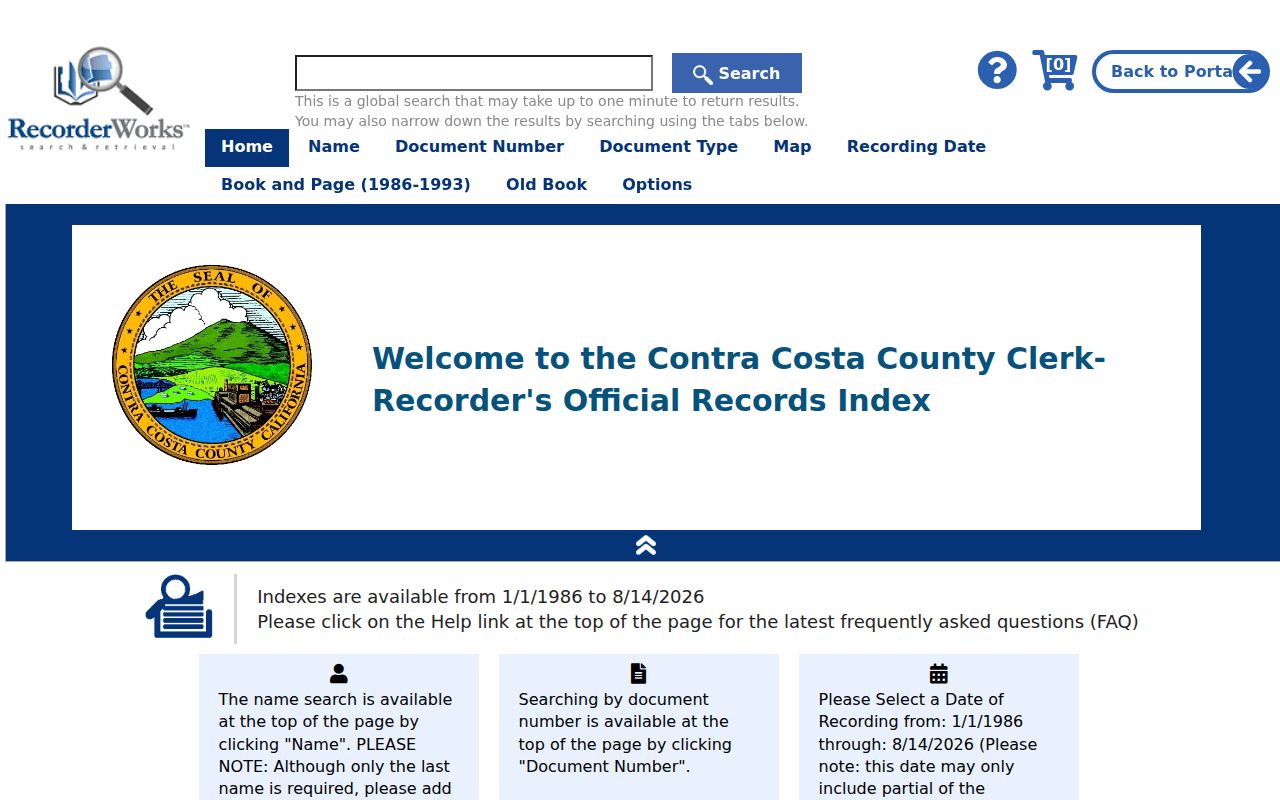
A deed result is a dated ownership clue. Pair it with the parcel description before treating it as part of a current resident lookup.
Current Antioch Resident Directory Sources
There is no single current Antioch residents directory that lists every household. The closest sources each cover a defined slice, and some are deliberately not browseable. The table keeps the record question beside its custodian.
| Source | What It Can Show | Keeper | Access |
|---|---|---|---|
| Assessment roll and parcel tools | Parcel, value, structure, owner at the counter, mailing address | Contra Costa Assessor | Address/APN online; owner information at counter |
| Recorded-document index | Grantors, grantees, deeds, liens, maps, dates | Clerk-Recorder | Free index; books and copies vary |
| Voter status | Individual registration status, districts, polling information | California Secretary of State | Personal verification, not street browsing |
| Court portal | Parties, case roles, filings, hearings, public documents | Contra Costa Superior Court | Online by case type; some files at clerk or counter |
| Business and license indexes | Entity, agent, license, status, and public contact fields | California agencies | Free indexes with different coverage |
Use the Antioch resident lookup workflow when one person is the goal. Use the street page when the question is a whole address chain. A record can establish a business connection, a recorded interest, or a registration status without proving household membership.
Voter Status Is Not an Antioch Directory
California’s My Voter Status tool is an individualized check. It asks for first name, last name, date of birth, and, depending on the flow, driver license or ID information or Social Security number digits. It can return registration status, party preference, polling place or vote center, districts, and ballot status. It cannot lawfully serve as a casual reverse directory of an Antioch street.
Election Code sections 2194 and 2188 limit voter-file access and protect signatures, identification numbers, confidential addresses, and Safe at Home information. A qualified requester may seek a permitted file through Contra Costa Elections or the Secretary of State, but the application needs requester identity, purpose, jurisdiction, fields, format, certification, and payment. Personal status is not the same as a public list.
Use the official California voter-status form only for the person and information the flow requests.
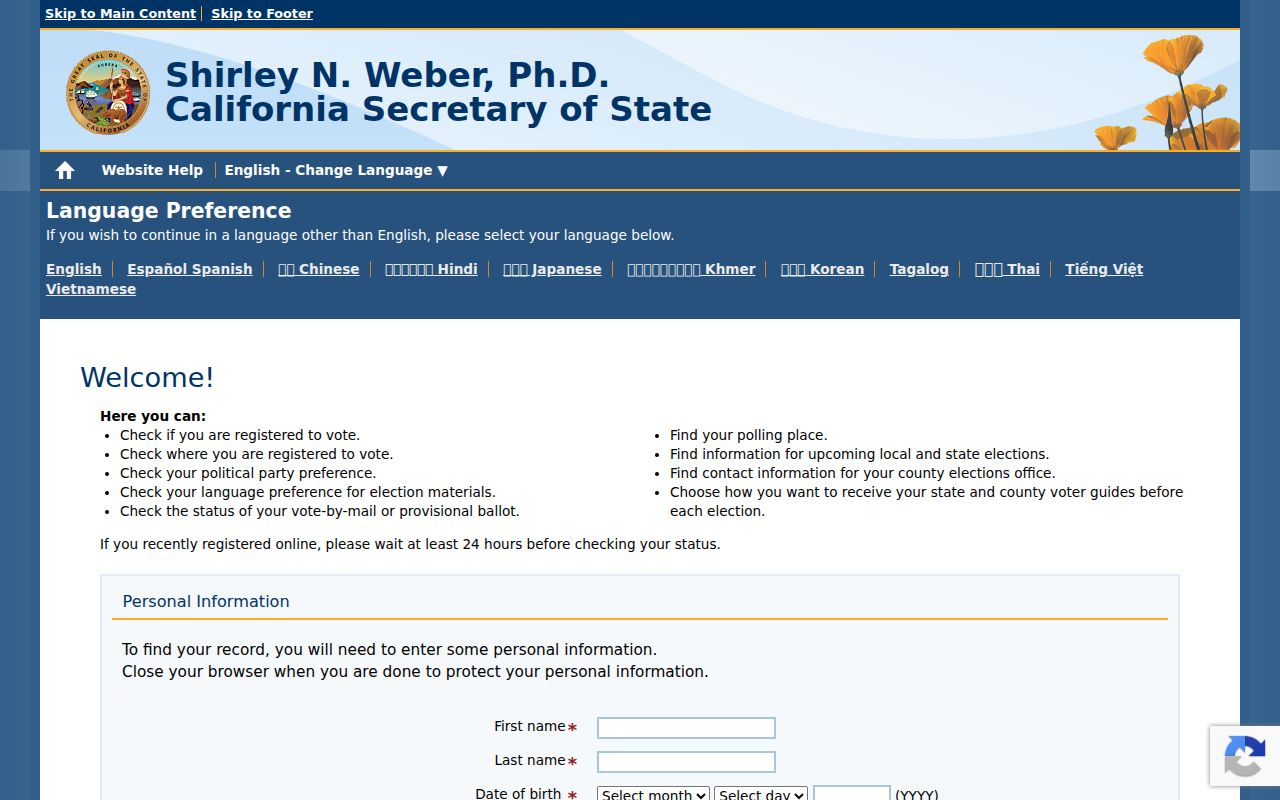
The returned status can help verify a known person, but inactive status does not establish the exact date someone left an address.
Antioch ZIP Codes Serve More Than One Map
Antioch’s two principal ZIP codes are 94509 and 94531. The first broadly covers historic waterfront, downtown, northern and central areas, including Somersville, Cavallo, A Street, and Wilbur corridors. The second broadly serves southeastern and newer growth around Lone Tree, Hillcrest, Deer Valley, Dallas Ranch, Prewett Ranch, and Golf Course. Those are useful map orientations, not legal neighborhood definitions.
ZIP geography, city limits, parcel boundaries, council districts, and court filing rules are separate layers. The city’s physical address can differ from its mailing address, and both Antioch ZIPs route Superior Court filing to Pittsburg. A ZIP can narrow a search, but an APN or legal description identifies land more reliably. Confirm a boundary address with USPS, the city GIS, the parcel map, and the proper custodian.
The Contra Costa court online-services page shows the court search path used in an Antioch residents directory search.
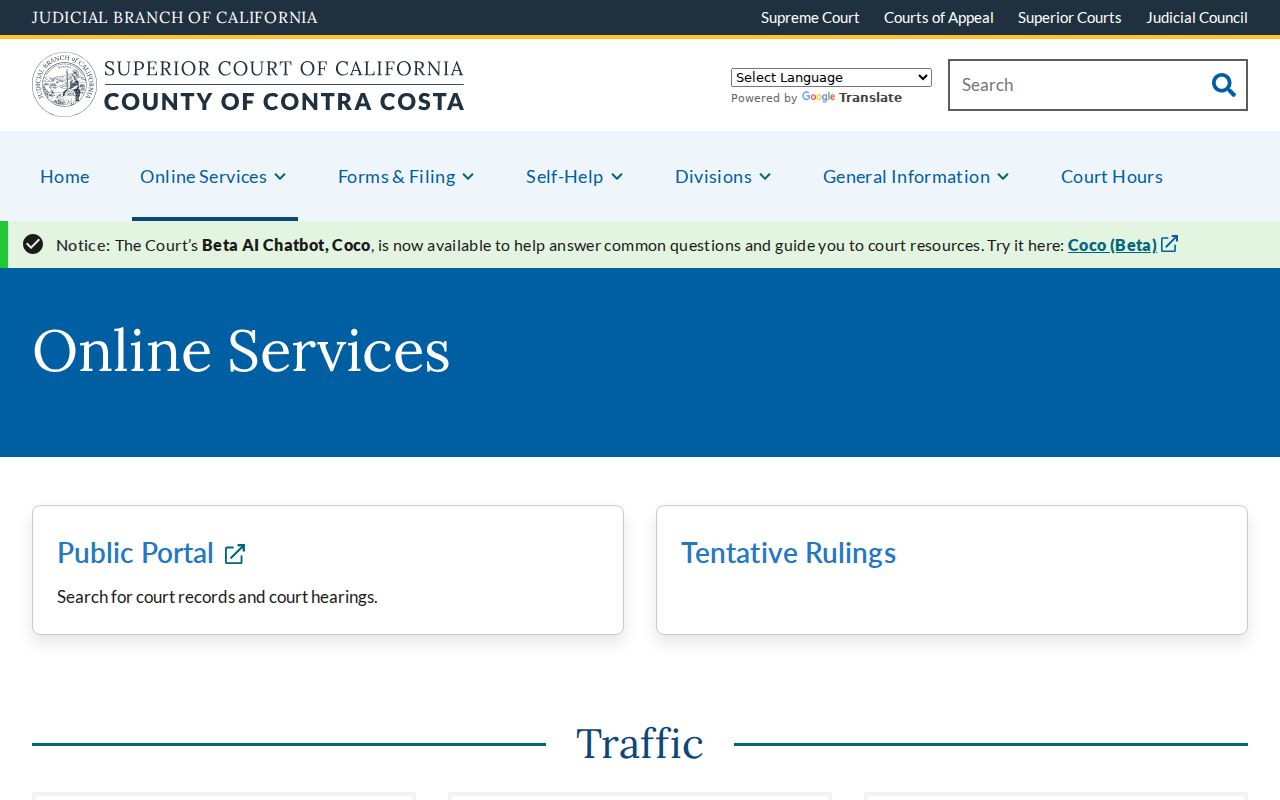
Court assignment is a service rule. It does not turn a ZIP into a roster of people.
Read Antioch Court Results in Context
Contra Costa’s Public Portal covers civil, small-claims, probate, criminal, family, traffic, and related services with uneven online scope. The party-name mode can use a case number, party or business name, first and last name, case type, and filing-date range. Results may show case number, caption, case type and status, filing date, party roles, judicial officer, hearings, register-of-actions events, and public minutes or documents.
Civil documents filed after November 13, 2007 may be viewable when the case category qualifies. Small-claims documents and minutes are online, while probate web access may show only register entries. Limited unlawful-detainer records are not online and require the clerk or case location. Older physical civil files may be retrieved from off-site storage in about ten business days, with picture ID required to view them. Court staff can confirm procedure, but they do not conduct broad research or give legal advice.
Traffic searches accept case number, citation number, or party name in Last, First MI form. Inactive matters over three years old do not display. Hearing search adds judicial officer, courtroom, location, hearing type or status, sounds-like matching, and date range.
Use the Contra Costa court services page before treating a name match as evidence.
A docket is the court’s chronological case record. Allegations, filings, and outcomes are different entries. A missing online result can reflect sealing, expungement, retention, or portal scope rather than proof that no case existed.
Note: A court portal omission may reflect case type, sealing, or retention rather than proof that no case existed.
License and Business Clues in Antioch
Some Antioch residents directory searches begin with a professional or business connection rather than a parcel. California’s Department of Consumer Affairs search offers boards and bureaus, license type, license number, business name, first name, last name, registry number, and advanced filters for cities, counties, status, discipline, and public documents. A result can show license status, original issue, expiration, public address, and discipline links when the board publishes them.
California Secretary of State bizfile Online searches by entity name or file number, with Business and UCC modes. Advanced filters include entity type, status, filing dates, and begins-with matching. A result may show entity number, status, jurisdiction, agent, street or mailing address, filings, and Statement of Information timing. An agent or service address is an affiliation clue, not proof of a home.
See the DCA license search when a credential is known.
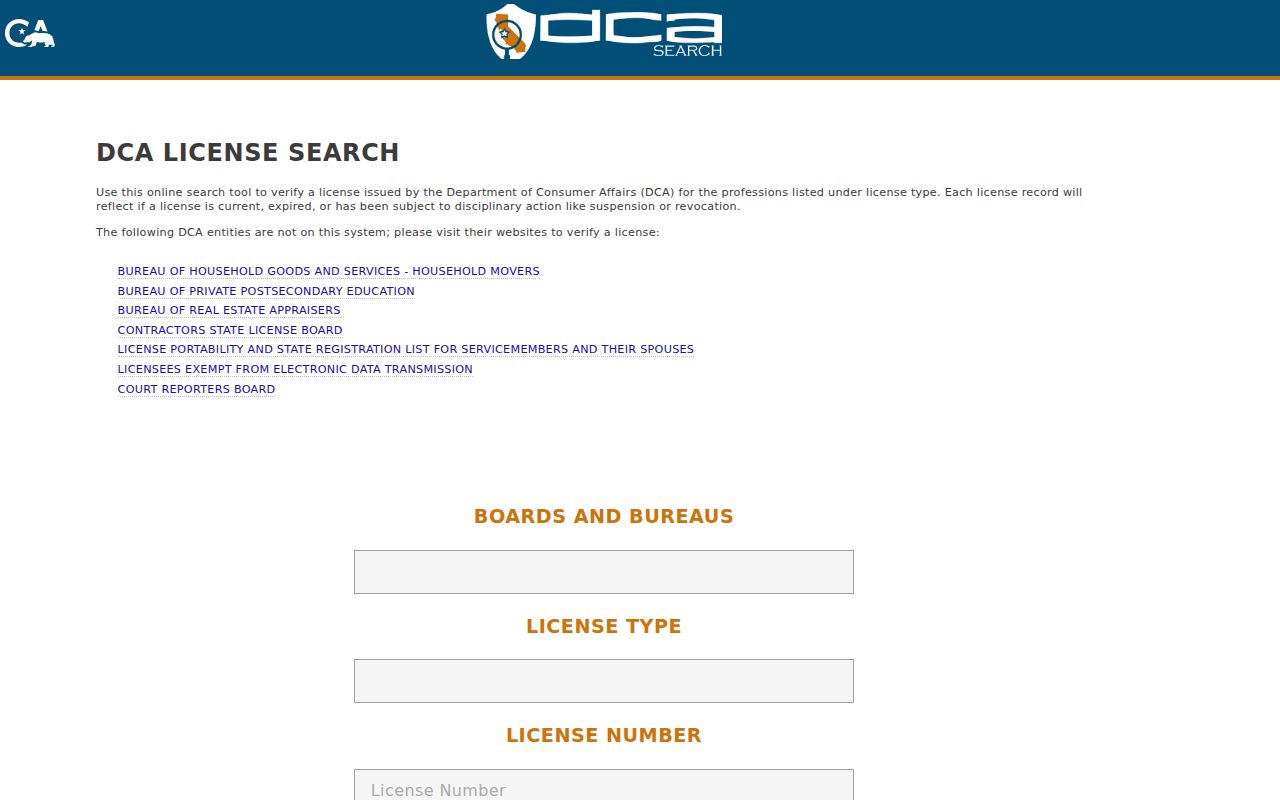
Credential records help separate two people with the same name when the board, city, effective date, and status fit the rest of the trail.
For a company or trade name, search bizfile Online and then pair the entity with a county fictitious-business-name filing or city permit request. Unclaimed property can add a reported name and older address, but it is a claim lead, not current-residence proof.
The business result becomes more useful when its filing date and role are compared with a deed, court record, or newspaper entry.
When an Old Antioch Address Is All You Have
An old address calls for a different Antioch residents directory path. Start with an APN and legal description, then walk recorded deeds backward from the current owner to the prior grantor. Between deed events, use the Antioch Ledger family of titles, telephone books, census schedules, obituaries, probate files, and historical tax or parcel logs to find occupants who were not owners.
The local newspaper record begins with the Antioch Ledger in 1870 and changes through Weekly Antioch Ledger, The Ledger, Daily Ledger, Daily Ledger Post Dispatch, and Ledger Dispatch. Online issues, branch film, paper holdings, and NewsBank cover different runs. Searching only the first title can hide a later name or address. A road-only reference, a subdivision change, or a modern number applied backward can also mislead.
The Antioch city directory collections page explains how the library shelf, telephone books, and census years fit together. Historical research is strongest when each household clue is paired with a dated official record.
Request Antioch Records That Are Not Online
California’s Public Records Act, Government Code section 7920.000 et seq., supplies the request framework for identifiable city and county records. Antioch says it intends to make an initial disclosure determination within ten days and commonly processes requests in two to four weeks. The ten-day rule is a determination deadline, not a promise that copies will be ready then. County and city agencies accept requests through different channels.
For Antioch city records, use the current records-request hub or contact the City Clerk by email, mail, or counter. A request should state the department, date range, subject terms, and whether inspection or copies are preferred. County requests may be oral, by phone, at the counter, by email, mail, or fax to the custodian. Inspection is ordinarily free; copying can carry direct duplication cost. The Clerk of the Board at 1025 Escobar Street can help identify a custodian.
The city’s plain-language request rules are also summarized in its public-record FAQ. The Antioch records-request hub is the formal route shown below.
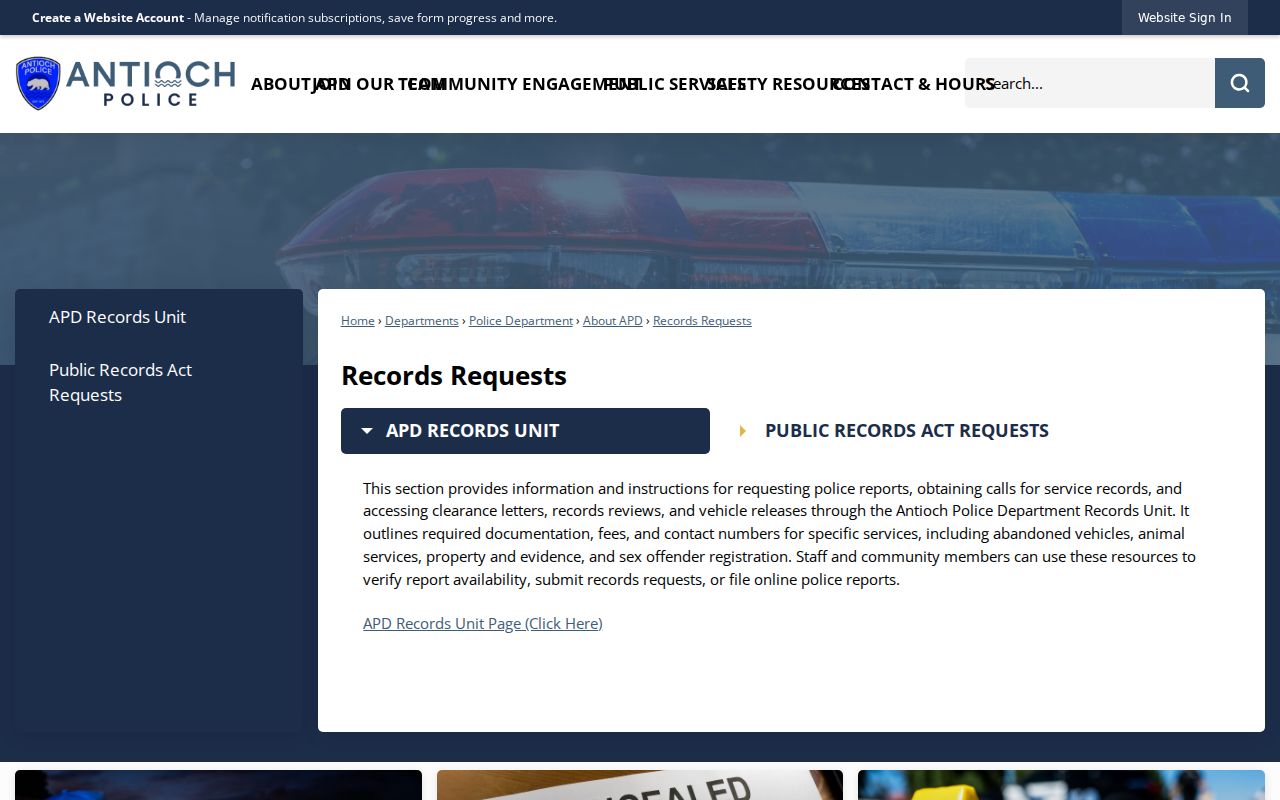
The request hub is a route to an existing record, not a reverse resident directory. A focused description helps the custodian search without asking staff to answer a question that no record states.
Use a second view when a page explains the timing or inspection rule, because the city’s FAQ and request hub serve different steps.
The Antioch public-record FAQ supplies the timing and request guidance shown in the next capture.
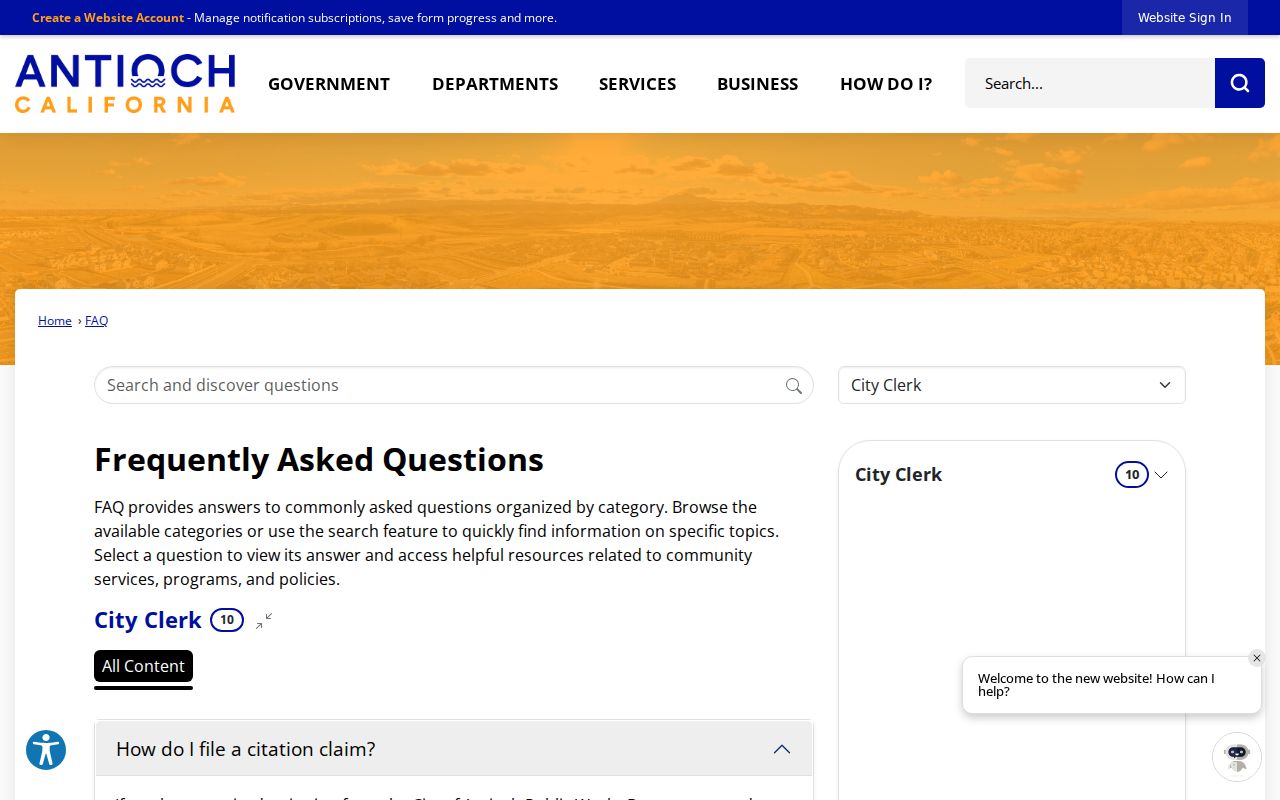
Police reports, building plans, personnel material, active investigations, medical details, protected addresses, and confidential identifiers can have separate exemptions or authorization rules.
Note: A focused request asks for an existing record and does not require an agency to create a new resident list.
Historical Antioch Resident Directories
The historical side of an Antioch residents directory lives in collections rather than a current roll. Digitized Pacific Telephone & Telegraph county volumes verify Antioch town sections for December 1946 through June 1948, March 1949 through September 1950, and a July 1957 Contra Costa volume. A 1949 entry can show a subscriber name or initials, an r residence mark, a street or road-only address, and a telephone number. It does not prove that every household member was present.
The Antioch Historical Museum Library Room holds bound Daily Ledger issues, original city tax and parcel logs, meeting logs, and community binders. The Schools Room holds Antioch High and Deer Valley High yearbooks from 1956 onward and earlier graduation photographs. Contra Costa County Historical Society holdings add assessor books from 1850 through 1910, court and probate material, naturalization papers, obituaries, maps, and research assistance.
Pair a directory year with 1950 census, then verify relationships in a newspaper, vital, deed, or probate file.
Protected Antioch Records Need Care
A complete Antioch resident roll cannot exist because some people and fields are shielded. California’s address-confidentiality program provides a substitute mailing address for eligible survivors and certain reproductive-health workers, patients, and volunteers. Protected officials can receive additional address confidentiality. California limits voter-file use, the federal Driver’s Privacy Protection Act restricts DMV data, and sealed court, juvenile, adoption, confidential-vital, and protected-family information is not an ordinary search result.
Lawful personal research. Public availability does not authorize repeated unwanted contact, threats, trespass, or harassment. Verify with the custodian, respect protected-address programs, and use a record for a legitimate personal, family-history, civic, or safety purpose.
Correct a mistaken assessor field with the assessor, a recorded-index issue with the recorder, a voter record with Elections, a court docket with the clerk or legal process, and a license entry with the issuing board. A city clerk cannot correct a county or state record. The safest resident lookup keeps each correction with the office that created or maintains the data.