
Antioch's City Directory Shelf by Era
The Antioch directory record is a set of publications, not one continuous book. The table separates documented holdings from catalog leads so an unverified volume is not treated as a complete town-wide claim.
| Collection | Years | Where Held | Access |
|---|---|---|---|
| Antioch newspapers and Ledger title family | 1870 onward, with gaps | Contra Costa County Library and Antioch branch | Selected online; film and paper; NewsBank with card access |
| Pacific Telephone & Telegraph Contra Costa pages | Dec. 1946-Jun. 1948; Mar. 1949-Sep. 1950; July 1957 item | Library of Congress digital telephone volumes | Image, OCR, and PDF access where offered |
| Polk Richmond/Contra Costa directory lead | 1914-1915 discovery lead | FamilySearch catalog and local research shelves | Inspect the volume before claiming Antioch coverage |
| Pittsburg and Antioch directory lead | 1960 discovery lead | Genealogy catalog and local collections | Verify the volume and Antioch pages in person |
| Antioch school yearbooks and graduation photographs | Yearbooks 1956-present; earlier photographs | Antioch Historical Museum Schools Room | Onsite museum access during documented room hours |
The verified evidence does not establish a continuous Antioch Polk run, and it does not establish exact years for Antioch-specific Sanborn sheets. Those gaps belong in a research log. They do not justify filling missing decades with a nearby city or a generic directory listing.
Antioch's City Directory Substitute Begins with the Ledger
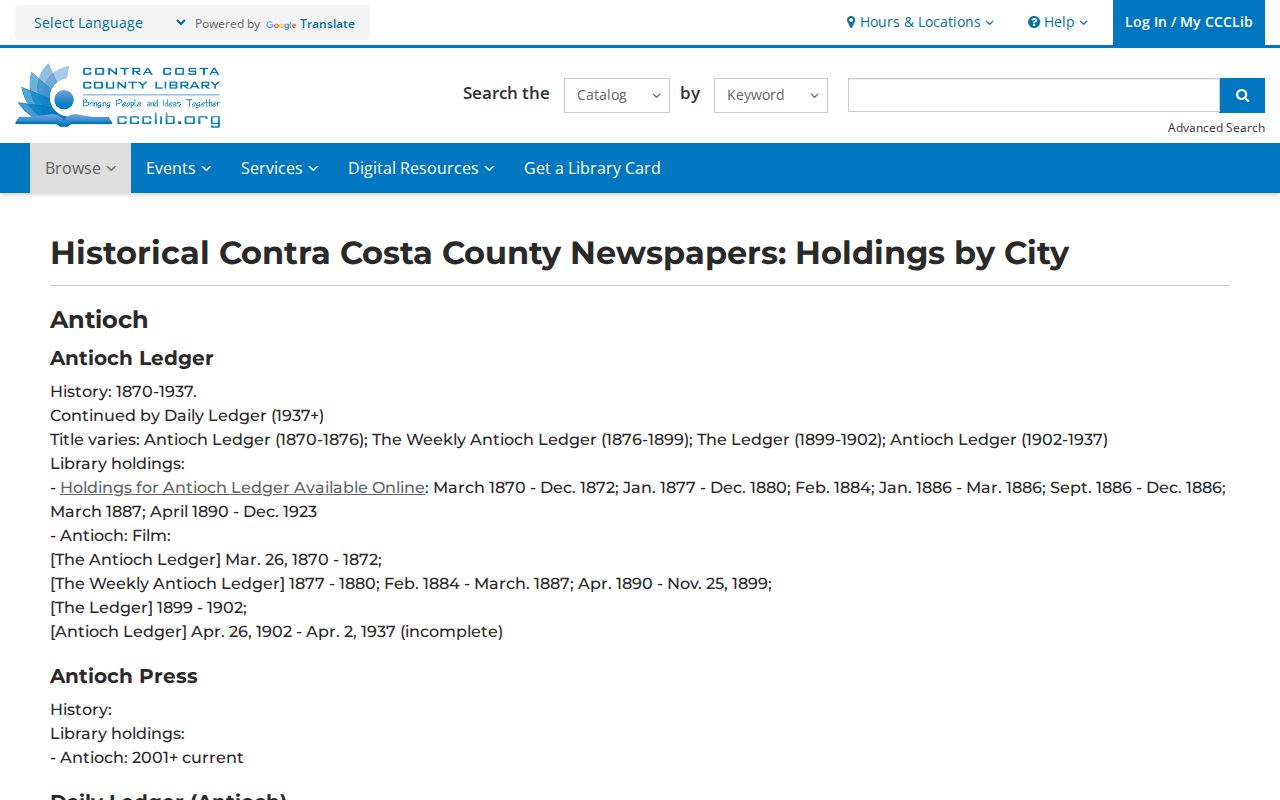
Story. Antioch's local press begins with the Antioch Ledger in March 1870, and its changing title is part of the search method. The lineage is Antioch Ledger, 1870-1876; Weekly Antioch Ledger, 1876-1899; The Ledger, 1899-1902; Antioch Ledger, 1902-1937; Daily Ledger, 1937 through September 30, 1990; Daily Ledger Post Dispatch, October 1, 1990 through August 7, 1994; and Ledger Dispatch from August 8, 1994 onward. A catalog search limited to “Antioch Ledger” can miss the later titles.
The library's selected online pages run from March 1870 through December 1872, January 1877 through December 1880, February 1884, portions of 1886, March 1887, April 1890 through December 1923. Antioch branch film covers substantial 1870-1937 material, Daily Ledger film from April 1937 through November 1988, and broader Ledger film and paper through the late 1990s. NewsBank carries Ledger Dispatch from March 1997. These channels hold obituaries, marriages, school lists, legal notices, land transactions, business advertisements, and social columns that can fill the years a volume misses.
The Contra Costa County Library's historical newspaper holdings page gives the clearest route to the online, film, and paper versions of this Antioch directory substitute.
| March 1870 | Antioch Ledger begins the documented local press trail. |
|---|---|
| 1937 | The title becomes Daily Ledger. |
| 1990-1994 | Daily Ledger Post Dispatch appears, followed by Ledger Dispatch. |
| March 1997 | NewsBank coverage begins for Ledger Dispatch. |
Review the Contra Costa historical newspaper holdings before choosing an online scan, film reel, or paper issue for the year in question.
Search a name with an address or street, then verify the claim against a deed, vital record, court file, or probate index. A notice is not automatically proof of ownership or a complete household.
A 1949 Antioch City Directory Sample, Read Carefully
The verified 1949 Pacific Telephone & Telegraph Contra Costa volume is a useful sample because Antioch has its own town section. The Library of Congress scan includes “Ruckstuhl George r Ferry Rd,” “Rudicel Clair F r 1916 Birch,” and “Ruiz Olivia r 605 17th,” followed by telephone numbers. The sample verifies a subscriber's name or initial, a residence marker, a road or standardized street address, and a phone number. It does not verify a spouse, occupation, property ownership, or every person in the household.
PT&T evidence covers December 1946-June 1948 and March 1949-September 1950, with a July 1957 volume as another discovery point. OCR can drop digits, so read the image. Keep a road-only entry such as Ferry Rd road-only until another source supplies a number.
A telephone page is a dated address clue, not a complete household. Pair it with newspapers, census, museum logs, or recorded instruments.
Note: OCR can omit telephone digits, so the scanned page outranks a text snippet for a cited entry.
How to Read an Antioch City Directory Entry
Before copying an entry, note the town header, volume date, publisher, and abbreviation key, then transcribe the line exactly. The telephone sample supports fewer fields than a household or reverse directory.
| Name | Subscriber surname followed by given name or initial, such as George or Clair F. |
|---|---|
| Spouse | Not shown in the verified 1949 PT&T sample; do not infer a spouse from a shared surname. |
| Occupation | Not shown in that telephone sample; a separate directory may carry an occupation or employer field, but the Antioch Polk convention is unverified. |
| Address | An “r” marks residence in the sample, followed by a road-only or numbered street address. |
| Owner or renter mark | No owner/renter mark is verified in the sample. Property status must come from assessor or recorded land material. |
| Telephone | The number follows the subscriber line, but OCR may omit digits, so inspect the page image. |
- Criss-cross section
- A reverse section arranged by street and number so a researcher can move from an address to names. Antioch's exact printed run is not verified.
- Householder index
- An alphabetical name section centered on adults or heads of household. It is not a list of every person living at an address.
- Abbreviation key
- The publisher's legend for marks such as h, r, wid, and emp. Check it in each volume because the same letters can vary by publisher.
Use the Criss-Cross Method for an Old Antioch Street
A criss-cross search reverses the usual name-first order. Start with the street and number, scan nearby lines, and record every adult entry, telephone mark, and spelling variant. Then move back to the alphabetical section to see whether the same person appears with an occupation, spouse notation, or another address. This method is especially useful for house history because it keeps adjacent entries together.
Do not present the method as proof that a complete Antioch reverse directory exists. The exact publisher and year runs remain unverified, so test the catalog, microfilm, local shelves, and newspaper holdings separately.
Keep a glossary beside the volume: “r” is a residence indicator in the PT&T sample; “wid” can identify a widow; “h” may mean home or householder; and “emp” can mean employed. Only the volume's key controls.
Antioch Historical Museum Rooms Add Local Context
The Antioch Historical Museum Library Room is a different kind of local history resource. At 1500 W. 4th Street, it holds bound Antioch Daily Ledger issues from 1932-1988, original city tax, parcel, and meeting logs, and community-group binders. Documented hours are Wednesday and Saturday, 1-4. Contact the museum with a surname, street, and date range before traveling.
The museum's Library Room description shows why a local visit can answer questions that a keyword search cannot.
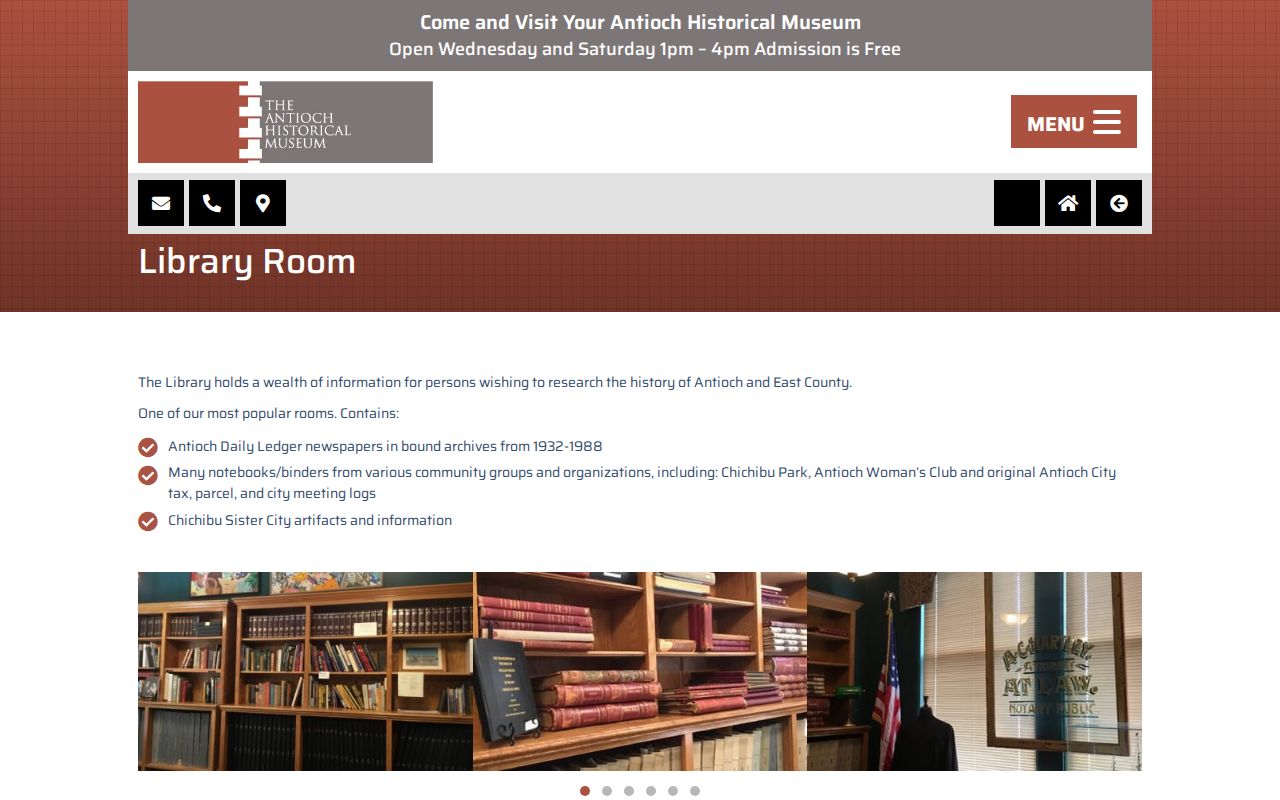
The Library Room's original logs can anchor a newspaper clue to a local date without pretending they are a complete resident list.
For school-age residents, the museum's Schools Room collection holds Antioch High and Deer Valley High yearbooks from 1956 onward, plus graduation photographs from the 1920s and 1930s onward.
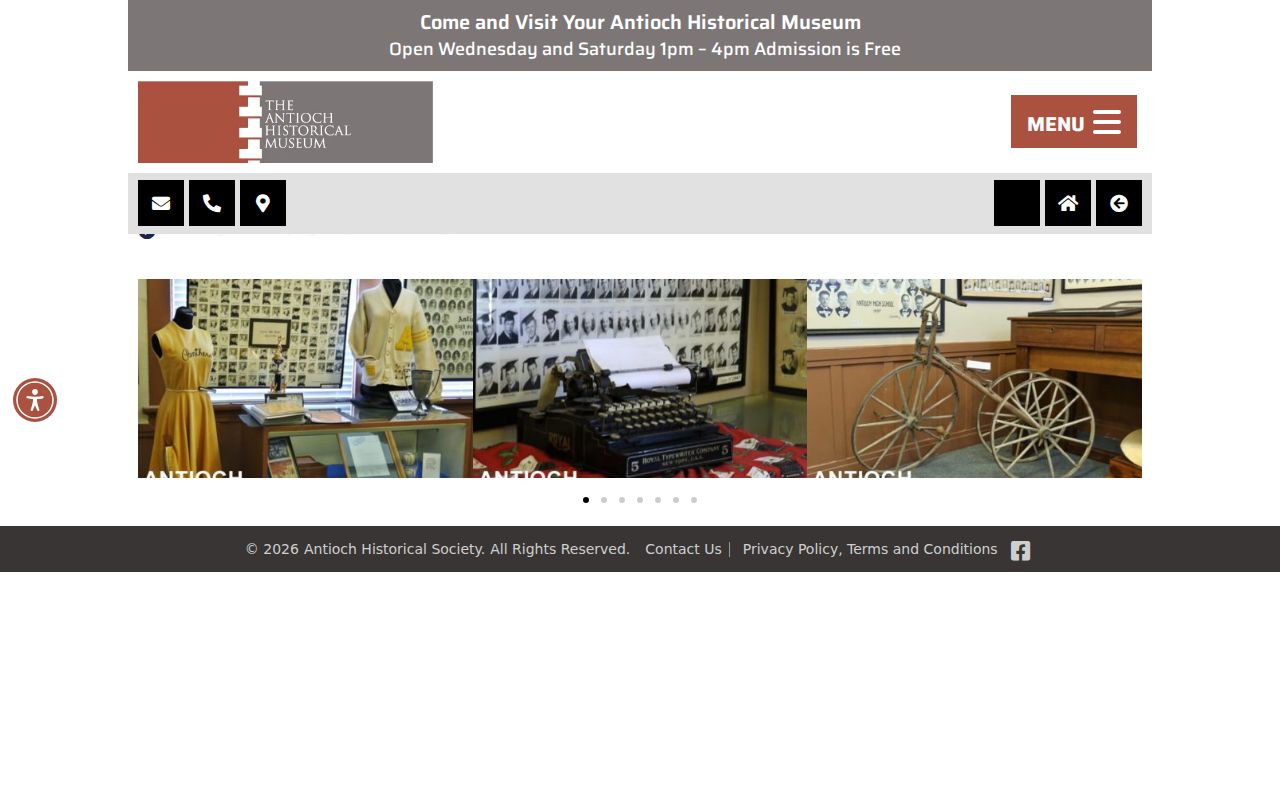
Yearbooks do not establish a present address, but they can confirm a school connection before another record supplies the next step.
The Numbers on the Contra Costa History Center Shelf
Numbers. The Contra Costa County Historical Society History Center holds annual tax-assessor books from 1850-1910, court, probate, criminal, and naturalization records from the 1850s into the twentieth century, plus indexed local material. Its indexes include more than 9,300 cases naming more than 61,000 people, more than 1,000 probate documents, more than 13,000 naturalization papers, more than 4,000 obituaries, and more than 1,700 maps.
Staff research is quoted at $20 per hour for members and $30 per hour for nonmembers. Naturalization research has a separate service schedule: certified service is $60 for nonmembers or $40 for members, plus tax and shipping; noncertified service is $30 for nonmembers or $20 for members. On-site PACT searching is free. Give the History Center names, places, date ranges, and a specific question rather than asking for an undefined directory search.
The Contra Costa County Historical Society collections page is the right starting point for holdings, access limits, and a research quote. It is a corroboration source, not a substitute for the original custodian of a deed or vital certificate.
Note: History Center indexes are finding aids, so retain the original collection reference behind each Antioch name.
Pair Antioch City Directories with the 1950 Census
The 1950 federal census is the latest public census in 2026 because schedules remain confidential for 72 years; 1960 opens in 2032. That makes a 1949 or 1950 telephone entry useful: it supplies a street clue while the census adds relationship, age, birthplace, and occupation for the enumerated household.
An address will not always line up cleanly. Enumeration districts, street changes, road-only descriptions, and a directory's subscriber focus can split one household across sources. Search the surname in the Library of Congress text, confirm the town header and image, preserve the printed address, then compare the nearby census enumeration. Treat a missing name as a question, not as proof that the person left.
For later decades, museum yearbooks, Ledger notices, deeds, probate material, and the July 1957 telephone volume can bridge the gap. Note whether a library or FamilySearch channel supplied an index or image.
Note: The 1950 census is public in 2026, while 1960 remains closed until 2032 under the 72-year rule.
Trace a Household Through Antioch City Directories
Use the city directory as a sequence of dated clues. A simple, repeatable workflow keeps a family story separate from a guess about a modern person and makes every handoff visible.
- Find the earliest plausible name in a verified Antioch issue, and record the town header, page, spelling, initials, address, and mark.
- Compare the next available issue, first within the PT&T 1946-1950 runs and then with the July 1957 volume or local newspaper holdings.
- Flip to a street-order or criss-cross section when one exists, and copy adjacent names without assuming that every line is a separate household.
- Pair the directory date with the 1950 census or another public census year, checking age, birthplace, relationship, and occupation rather than relying on surname alone.
- Close the trail with a Ledger obituary, legal notice, probate index, yearbook, deed, or museum log, and cite the original custodian for each fact.
A person disappearing from the volume can mean a move, death, an unlisted telephone, a new household subscriber, or an indexing gap. Compare title coverage, address, relatives, and newspaper notices before choosing one explanation. That discipline is what makes an Antioch city directory useful for genealogy and house history.
What the Antioch City Directory Record Cannot Yet Confirm
The stopping points matter. Research confirms the PT&T runs, Ledger lineage, museum rooms, History Center collections, and 1950 census rule. It does not confirm a continuous Antioch Polk run, exact reverse-directory coverage, a local Polk sample, or Antioch Sanborn years. A telephone list is not a complete resident roll.
When the catalog is silent, ask the library or museum to test the physical collection, search every Ledger title variant, and retain the negative result. The Library of Congress Sanborn map collection is a search lead, but no Antioch sheet or year was confirmed. A documented gap is more useful than an unsupported year. For a current address question, use the appropriate county or city custodian.
Research boundary. A directory entry is a dated clue about a named subscriber or adult entry. Confirm ownership, family relationships, and current status with the office or collection that actually records those facts.